Text
batik: From the Courts of Java and Sumatra
Glosarium hlm. 87-88; bibliografi hlm. 93 | hanya untuk dibaca di tempat.
___
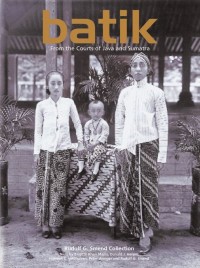
Batik is one of Indonesia's most highly developed art forms and occupies a special position in the country's history and culture. A succession of religions (Hinduism, Buddhism, and Islam), waves of colonization (Chinese, Indian, Arab, Portuguese, Dutch, and English), and the development of a highly sophisticated culture in the courts of Java and Sumatra which en-couraged the supremacy of the aristocracy, all left their imprint on the development of batik. In a rank-conscious society, class distinctions were made by the type of textiles worn and their patterns-many dress styles and motifs were the prerogative of royalty-although the development of Indo-European batik led to widespread use of the sarong. The 71 batik textiles shown in this book are from the collection of Rudolf G. Smend. Most date from the period 1880-1930 when the art of batik in Java reached its peak. Emanating from the provincial and stately courts of Yogyakarta dan Surakarta in Central Java are hip, chest, shoulder, and head clothes in controlled, orderly, geometric patterns in natural soga brown, indigo blue, black, and cream. Brighter colors and freer designs on the sarongs made in Cirebon, Pekalongan, Lasem, and other towns along Java's commercial north coast eloquently attest to the blending of indigenous froms, motifs, and colors with outside influences. Southern Sumatra, with its Muslim heritage, contributed large shoulder cloths and headscarves, often bearing Koranic invocations. These extraordinary clothes are complemented by 16 vintage photos from the Leo Haks collection, which demonstrate how batik was worn at court and in other settings.
Ketersediaan
Informasi Detail
- Judul Seri
-
-
- No. Panggil
-
746.662 5980261 GAL b
- Penerbit
- Germany : Galerie Smend., 2000
- Deskripsi Fisik
-
96 hlm.; ill.
- Bahasa
-
English
- ISBN/ISSN
-
-
- Klasifikasi
-
746.662 5980261
- Tipe Isi
-
still image
- Tipe Media
-
-
- Tipe Pembawa
-
-
- Edisi
-
Rudolf G. Smend Collection
- Subjek
- Info Detail Spesifik
-
-
- Pernyataan Tanggungjawab
-
-
Versi lain/terkait
Tidak tersedia versi lain
Lampiran Berkas
Komentar
Anda harus masuk sebelum memberikan komentar
 Karya Umum
  Filsafat
  Agama
Agama  Ilmu-ilmu Sosial
  Bahasa
  Ilmu-ilmu Murni
  Ilmu-ilmu Terapan
  Kesenian, Hiburan, dan Olahraga
  Kesusastraan
  Geografi dan Sejarah